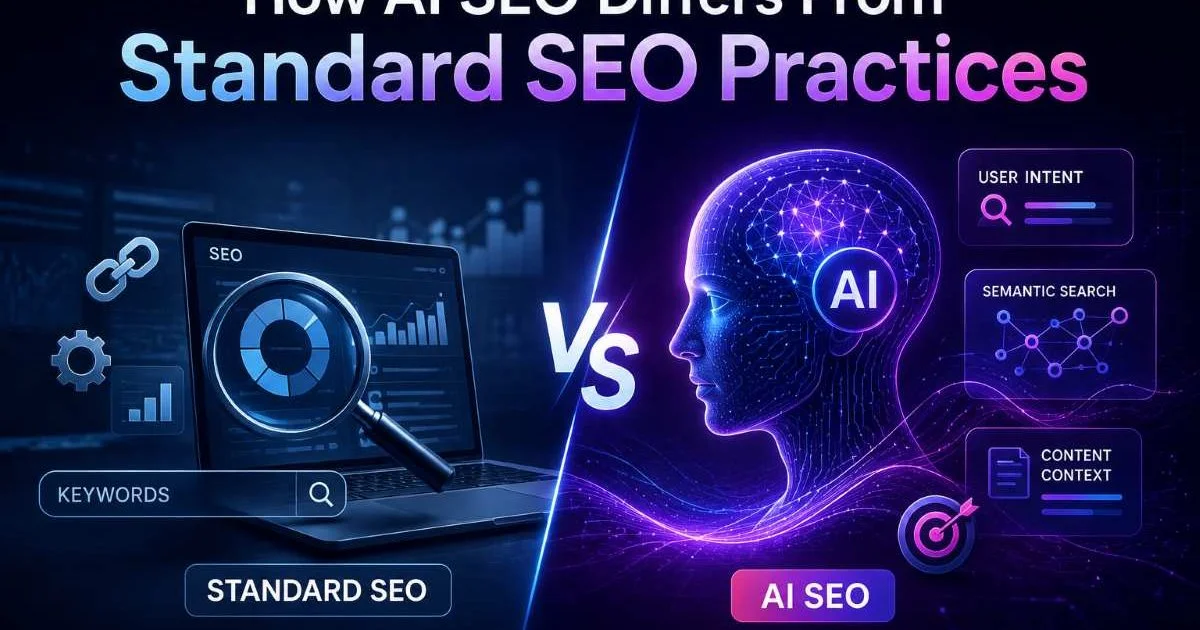
Website AI crawling represents a fundamental shift in how machines discover, interpret, and act on web content. For years, traditional crawlers from search engines like Google and Bing have dominated the landscape, following links, parsing HTML, and indexing pages based on well-understood rules.
But a new generation of AI agents, powered by large language models, is now crawling the web with very different goals and methods. These agents don't just index your pages; they extract answers, compare products, and make autonomous decisions. Understanding the differences between these two crawling paradigms is no longer optional for web developers and SEO professionals. If your site isn't optimized for both, you're leaving visibility on the table. Running a thorough AI readiness website audit is a smart first step toward understanding where your site stands in this new reality. The stakes are real: agent-friendly websites will capture traffic that traditional technical SEO alone can't deliver.
Key Takeaways
- AI crawlers seek structured answers while traditional crawlers primarily build keyword-based indexes.
- Agent-friendly optimization requires structured data, clear metadata, and machine-readable documentation.
- Traditional SEO still matters because AI agents rely on well-crawled, accessible foundations.
- Websites that serve both crawler types will outperform those optimized for only one.
- Technical SEO hygiene, including fast load times and clean HTML, benefits every type of crawler.
How Each Crawler Discovers Content
Traditional Crawler Behavior
Traditional crawlers like Googlebot operate on a straightforward model: they start with a seed URL, follow hyperlinks across pages, and store rendered HTML in massive indexes. They respect robots.txt directives, follow sitemaps, and use canonical tags to avoid duplicate content. The entire process is well-documented, and webmasters have had decades to refine how they guide these bots through their sites. Crawl budgets, link structures, and internal linking hierarchies all play into how efficiently Googlebot discovers your content.
The crawl frequency depends on your site's authority, freshness signals, and server responsiveness. High-authority domains get crawled more often, while newer or smaller sites may wait days or weeks between visits. Traditional crawlers also rely heavily on the link graph, meaning pages without inbound links (orphan pages) often go undiscovered entirely. This makes internal linking architecture a core concern of technical SEO.
Traditional crawlers typically ignore content behind login walls, JavaScript-heavy single-page apps without server-side rendering, and pages blocked by meta robots tags.
AI Agent Crawling Patterns
AI agents crawl differently. They may arrive at your site through API endpoints, structured data feeds, or direct HTTP requests triggered by a user query. Tools like ChatGPT's browsing feature, Perplexity AI, and various autonomous agents don't necessarily follow your sitemap or respect traditional crawl hierarchies. They often target specific pages or data points rather than crawling your entire domain. Their goal is to retrieve a precise answer or dataset, not to build a comprehensive index of every page you publish.
These agents frequently use real-time web scraping APIs and headless browsers to access content dynamically. They can parse JSON-LD, read API documentation, and interpret structured schemas far more effectively than early search engine spiders could. The discovery pattern is task-driven rather than graph-driven, meaning your content needs to be directly accessible and semantically clear, not just well-linked.
What Each Crawler Extracts and Values
Ranking Signals vs. Semantic Understanding
Traditional search crawlers extract signals like title tags, meta descriptions, header hierarchy, keyword density, backlink profiles, and page speed metrics. They use these signals to rank pages against competing content for specific queries. The extraction model is fundamentally about comparison: which page best matches a query according to hundreds of weighted ranking factors? Content quality matters, but it's mediated through proxy signals that algorithms can measure at scale.
AI agents, on the other hand, extract meaning. They parse your content for direct answers, structured facts, product specifications, and contextual relationships between entities. An AI agent doesn't care about your keyword density. It cares whether your page contains a clear, accurate, and well-structured answer to the question it was asked. Schema markup, FAQ sections, and clearly labeled data tables become far more valuable in this context than traditional on-page SEO signals.
The practical implication here is significant. A page that ranks well in Google might be completely invisible to an AI agent if it lacks structured data or buries its answers inside dense, unformatted paragraphs. Conversely, a page with excellent schema markup and clear FAQ structures might get cited by AI agents even if it sits on page two of Google's traditional results. Both extraction models reward quality content, but they define "quality" through different lenses.
"AI agents don't rank your page against competitors; they extract your answer and either use it or move on."
This distinction matters for web developers building content management systems and templates. If your CMS outputs clean semantic HTML with proper heading hierarchies, schema markup, and accessible content structures, you're building for both worlds simultaneously. If your templates rely heavily on visual design tricks, JavaScript rendering, or non-standard markup, you risk being readable by humans but opaque to AI agents.
Optimization Strategies Compared
Traditional SEO Tactics
Traditional technical SEO optimization focuses on crawlability, indexability, and rankability. You submit sitemaps, configure robots.txt, set canonical URLs, and build logical internal link structures. Page speed optimization through image compression, lazy loading, and CDN usage directly affects crawl efficiency and ranking. These tactics have been refined over 25 years and remain essential for organic search visibility.
Read also the article What Is AI Privacy Compliance? A Complete Guide
Content optimization in the traditional model involves keyword research, competitive analysis, and on-page factors like header usage and content length. Link building remains a primary off-page strategy. The goal is to signal relevance and authority to search engine algorithms that fundamentally work by comparing your page against every other page targeting similar queries. Traditional SEO is a competitive, zero-sum game for a finite number of ranking positions.
Don't abandon traditional SEO when optimizing for AI agents. A strong technical SEO foundation makes your site more accessible to all types of crawlers.
Agent-Friendly Optimization Tactics
Agent-friendly website optimization introduces new priorities. Implementing comprehensive schema markup (Product, FAQ, HowTo, Organization) gives AI agents structured hooks into your content. Creating machine-readable documentation, API endpoints, and standardized data feeds allows agents to programmatically access your information. Clear, concise answer blocks at the top of your content pages help agents extract what they need without parsing thousands of words of context.
Accessibility plays a dual role here. Proper ARIA labels, semantic HTML, alt text on images, and logical document outlines help both assistive technologies and AI agents understand your content. Sites that already follow WCAG guidelines often have a head start in AI agent optimization because the underlying principle is the same: make content understandable by machines, not just visually interpretable by humans.
| Dimension | Traditional SEO | AI Agent Optimization |
|---|---|---|
| Primary Goal | Rank higher in SERPs | Get cited or used by AI agents |
| Content Format | Long-form, keyword-optimized | Structured, answer-focused blocks |
| Metadata | Title tags, meta descriptions | Schema markup, JSON-LD, Open Graph |
| Link Strategy | Internal links, backlink acquisition | API endpoints, data feeds |
| Crawl Guidance | Robots.txt, sitemaps, canonicals | Structured documentation, llms.txt |
| Success Metric | Rankings, organic traffic | Agent citations, API requests |
| Time to Impact | Weeks to months | Varies by agent adoption |
Performance and Infrastructure Impact
Traditional crawlers have predictable behavior patterns. You can monitor Googlebot's activity in server logs, control its access through robots.txt, and estimate its crawl budget impact. Most traditional crawlers identify themselves through user-agent strings, making traffic analysis straightforward. Server infrastructure planning for traditional crawlers is a well-solved problem; CDNs, caching layers, and proper HTTP response codes handle the load efficiently.
AI agent traffic introduces new infrastructure challenges. These agents often don't identify themselves clearly, making it harder to distinguish bot traffic from human visitors in your analytics. They may send bursts of requests when triggered by popular queries, creating unpredictable load patterns. Some agents render JavaScript, while others only parse raw HTML, meaning your server-side rendering strategy directly affects what content they can access.
Monitor your server logs for unidentified bot traffic. AI agents may consume significant bandwidth without appearing in standard analytics tools.
The cost implications are worth considering too. Traditional crawl traffic is generally low-volume and predictable. AI agent traffic can spike unexpectedly if your content gets cited by a popular AI tool. Without proper caching and rate limiting, these spikes can affect site performance for human visitors. Web developers should implement edge caching strategies and consider creating lightweight API endpoints that serve structured data without the overhead of full page renders.
Smart infrastructure planning means preparing for both types of traffic simultaneously. Use monitoring tools that can differentiate between traditional search bots, known AI agents (like GPTBot, ClaudeBot, and PerplexityBot), and unidentified automated traffic. Set up separate rate limits and caching rules for each category. This dual-track approach protects site performance while maintaining maximum visibility to all types of crawlers, which is the real goal of modern technical SEO.
Frequently Asked Questions
?How do I make my site's structured data readable for AI agents?
?Can AI agents access JavaScript-heavy SPAs that Googlebot struggles with?
?Does optimizing for AI crawlers mean I can deprioritize traditional SEO?
?Will orphan pages ever get discovered by AI agents if Googlebot misses them?
Final Thoughts
The distinction between AI crawling and traditional crawling isn't about choosing one over the other. It's about recognizing that the web now serves two fundamentally different types of machine visitors, and your site needs to accommodate both.
Traditional SEO provides the foundation: clean HTML, fast servers, logical structure, and proper metadata. AI agent optimization builds on that foundation with structured data, machine-readable documentation, and answer-focused content. The websites that thrive in the coming years will be those that treat both optimization tracks as complementary rather than competing priorities.
Disclaimer: Portions of this content may have been generated using AI tools to enhance clarity and brevity. While reviewed by a human, independent verification is encouraged.