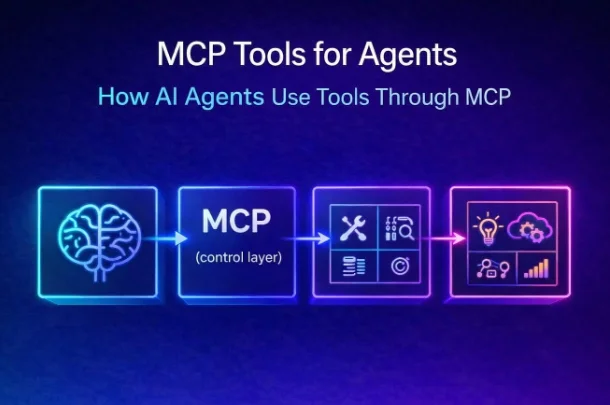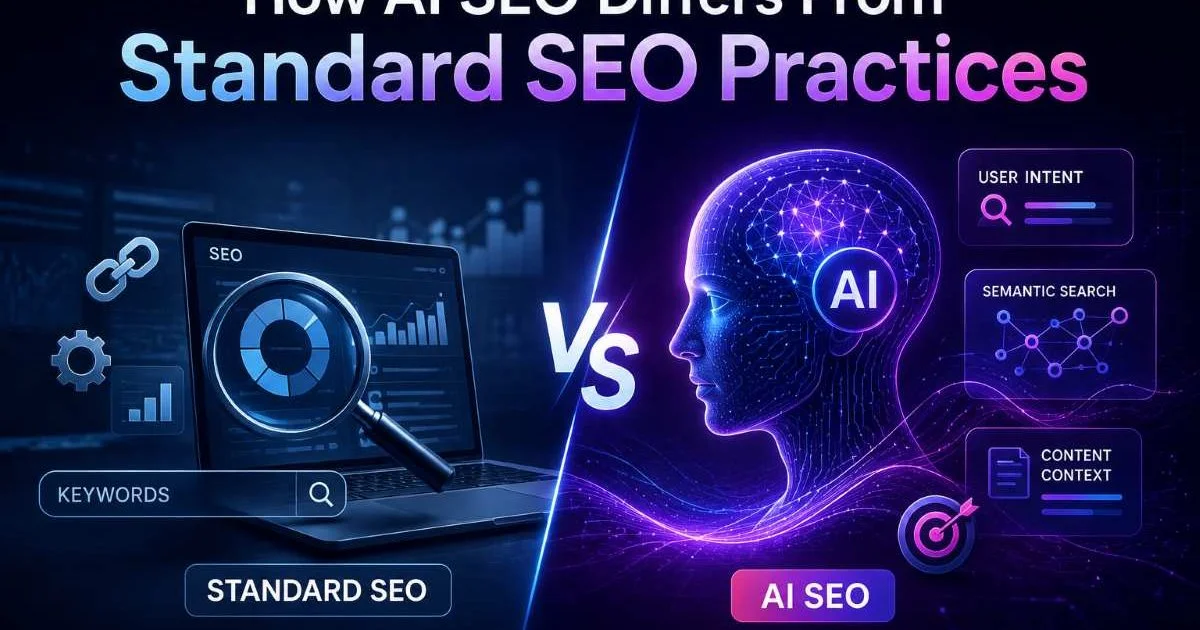
Making your website AI agent friendly is no longer optional if you want to stay visible in modern search and discovery channels. AI agents, from OpenAI's browsing tools to Google's AI Overviews, are now crawling, parsing, and summarizing web content at scale.
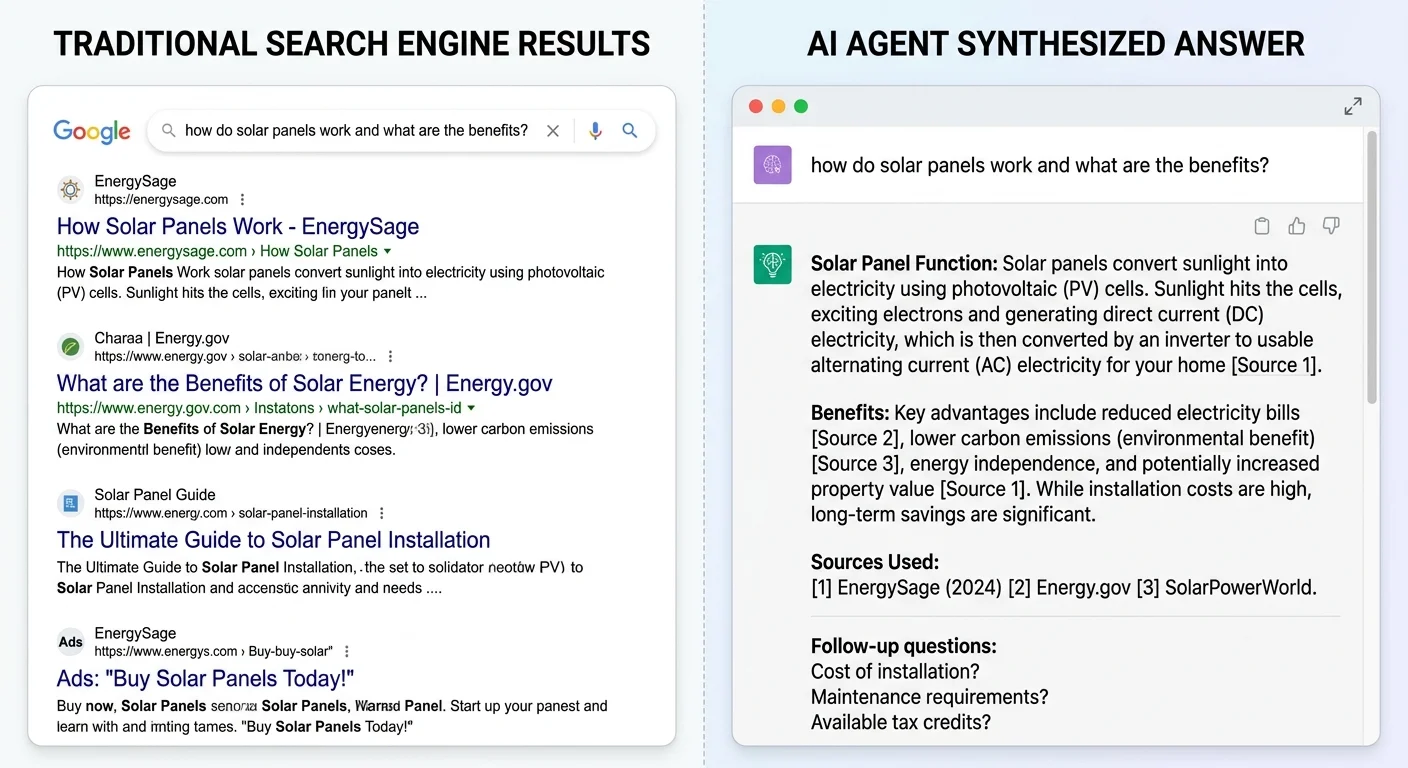
These agents don't behave like traditional search engine bots. They look for structured data, clean markup, fast load times, and machine-readable signals that most websites still lack. Technical SEO for AI agent optimization requires a different mindset than standard search engine optimization. If your site isn't built for these new visitors, you're already losing ground.
A thorough AI readiness website audit is the best starting point for understanding where your site falls short. This guide walks you through four actionable steps to bring your site up to standard.
Key Takeaways
- AI agents parse structured data differently than traditional search crawlers do.
- Clean semantic HTML dramatically improves how AI systems interpret your content.
- Schema markup gives AI agents explicit context about your pages and entities.
- Fast server responses and proper crawl permissions prevent AI bots from skipping your site.
- Testing your site with an AI readiness checker reveals hidden optimization gaps fast.
Step 1: Structure Your HTML for AI Crawling
Semantic Elements That Matter
AI agents rely on the DOM structure of your page far more than human visitors do. While a person can visually distinguish a navigation bar from a content area, an AI crawler needs semantic HTML tags to understand page hierarchy. Elements like <article>, <section>, <nav>, <header>, and <main> provide explicit signals about what content matters most. Using these elements correctly gives AI systems a roadmap of your page.
Heading hierarchy is particularly important. Every page should have exactly one <h1>, followed by logically nested <h2> and <h3> tags. AI agents use this hierarchy to build a content outline, which they then use for summarization and citation.
If your headings skip levels or repeat inconsistently, the agent's interpretation becomes unreliable. When you're building pages from scratch, choosing a solid HTML website builder that enforces clean markup can save significant cleanup later.
Run your HTML through the W3C validator before worrying about any AI-specific optimizations.
Common HTML Mistakes to Avoid
The most frequent problem is using <div> elements for everything. Divs carry zero semantic meaning, so an AI agent sees them as generic containers. Another common mistake is hiding content behind JavaScript-rendered components that require user interaction. Many AI crawlers execute JavaScript poorly or not at all, meaning tabbed content, accordion panels, and infinite scroll patterns can render invisible to them.
At the end of this step, your pages should have a clear, validated HTML structure with proper semantic elements. You should be able to view source and immediately identify the main content area, navigation, and heading hierarchy without relying on CSS classes for context.
Step 2: Implement Schema Markup and Metadata
Which Schema Types to Prioritize
Schema markup (structured data in JSON-LD format) is how you explicitly tell AI agents what your content represents. Without it, agents have to guess whether a block of text is a product description, a FAQ answer, or an author bio. With proper schema, there's no ambiguity. For most websites, the priority schema types are Organization, WebPage, Article, FAQ, and BreadcrumbList. These cover the majority of use cases.
For e-commerce sites, Product and Offer schema become essential. For local businesses, LocalBusiness schema with accurate address and hours data is non-negotiable. The key principle is to match your schema types to what your pages actually contain. Don't apply Article schema to a product page just because you read it was important. AI agents will detect the mismatch and may trust your site less as a result.

| Website Type | Primary Schema | Secondary Schema | AI Agent Benefit |
|---|---|---|---|
| Blog / Publisher | Article, WebPage | FAQ, BreadcrumbList | Content attribution and summarization |
| E-commerce | Product, Offer | AggregateRating, Review | Product comparison and recommendation |
| SaaS / Tool | SoftwareApplication | FAQ, HowTo | Feature extraction and categorization |
| Local Business | LocalBusiness | OpeningHoursSpecification | Location and service identification |
| Documentation | TechArticle, WebPage | BreadcrumbList, HowTo | Step-by-step instruction parsing |
Metadata Beyond Schema
Beyond schema, make sure your standard meta tags are thorough. Title tags, meta descriptions, Open Graph tags, and canonical URLs all feed into how AI agents categorize and reference your pages. Write meta descriptions that actually summarize the page content in plain language; AI agents often use these as a shortcut for understanding page purpose. Avoid keyword-stuffed descriptions that read like spam.
At the end of this step, every page on your site should have validated JSON-LD schema matching its content type, complete meta tags, and Open Graph markup. Test your schema using Google's Rich Results Test to confirm it parses correctly. If an AI agent visits your page now, it should be able to extract structured data about your content type, author, date, and topic without parsing the body text at all.
Schema validation tools check syntax, but they can't verify that your schema accurately reflects your content. Manual review is still necessary.
Step 3: Optimize Server Responses and Crawl Access
Configuring Robots and Permissions
Your robots.txt file and HTTP response headers determine whether AI agents can access your content at all. Several new AI crawlers have appeared in the last two years, including GPTBot (OpenAI), ClaudeBot (Anthropic), and Google-Extended. Each has its own user-agent string. If your robots.txt blocks these agents, your content won't appear in AI-generated responses. Review your robots.txt carefully and make deliberate decisions about which agents to allow.
Beyond robots.txt, consider implementing a well-structured XML sitemap that includes lastmod dates and priority values. AI agents use sitemaps to discover and prioritize content, just like traditional search bots. However, AI agents tend to weight freshness signals more heavily. If your sitemap shows outdated lastmod values, or if it's missing entirely, AI crawlers may deprioritize your pages. Keep your sitemap updated automatically through your CMS or build system.
Blocking all AI bots might seem protective, but it means your content won't appear in AI-powered search results or assistant responses.
Speed and Reliability
Server response time matters significantly for AI agent optimization. AI crawlers often process hundreds of pages in rapid succession. If your server takes more than 500ms to respond, some crawlers will abandon the request and move on. Aim for sub-200ms Time to First Byte (TTFB) on your most important pages. This means proper caching, CDN usage, and efficient server-side rendering.
At the end of this step, your robots.txt should explicitly address major AI bot user agents, your XML sitemap should be current and comprehensive, and your server should respond quickly under load. Test by checking your access logs for AI bot visits and confirming they receive 200 status codes with fast response times.
"AI agents are impatient visitors. If your server can't respond in under half a second, you've already lost the conversation."
Step 4: Test, Validate, and Iterate
Tools and Testing Methods
After implementing the first three steps, you need to verify everything works as expected. Start by running your site through an AI readiness scanner like the one at aiagentready.dev. This type of tool checks structure, metadata, accessibility, documentation quality, and agent-friendly signals all at once. It gives you a prioritized list of issues rather than forcing you to piece together results from five different validators.
Complement automated scanning with manual testing. Use your browser's developer tools to view your page with CSS disabled. This simulates roughly how an AI agent perceives your content. Is the reading order logical? Can you understand the page hierarchy from the raw HTML alone? Also check your server logs for actual AI bot visits. Tools like Screaming Frog can filter log files by user agent, showing you exactly which AI crawlers are visiting and what responses they're getting.
Set up a monthly log review to track AI bot crawl patterns. Sudden drops in crawl frequency often signal a technical problem.
What Success Looks Like
A properly optimized site will show several measurable outcomes. Your server logs should reflect regular visits from major AI bot user agents with 200 status codes. Rich Results Test should validate your schema without errors. Your HTML should pass W3C validation with minimal warnings. And when you ask an AI assistant about topics your site covers, your content should start appearing in its responses or citations. This last metric takes time, sometimes weeks, but it's the ultimate proof that your AI SEO work is paying off.
At the end of this step, you should have a documented baseline of your site's AI readiness score, a list of remaining issues prioritized by impact, and a recurring schedule for re-testing. Website AI agent optimization is not a one-time project. As new AI crawlers emerge and existing ones evolve their parsing capabilities, your site needs regular audits to maintain compatibility. Treat this like you treat technical SEO: it's an ongoing discipline, not a checkbox.
Frequently Asked Questions
?How do I run an AI readiness audit on my website?
?How do AI agents differ from traditional search engine bots?
?How long does it take to fix div-based layouts for AI crawling?
?Will schema markup alone make my site fully AI agent friendly?
Final Thoughts
Making your website AI agent friendly requires attention to four areas: semantic HTML structure, schema markup, server configuration, and ongoing testing. None of these steps are revolutionary on their own; most build on existing technical SEO best practices.
The difference is in understanding what AI crawling agents specifically need and making those signals explicit rather than implied. Start with an audit, work through each step methodically, and retest regularly. The sites that adapt now will dominate AI-powered discovery channels for years to come.
Disclaimer: Portions of this content may have been generated using AI tools to enhance clarity and brevity. While reviewed by a human, independent verification is encouraged.