Website AI agent optimization is the practice of preparing your site so that autonomous AI systems can effectively crawl, interpret, and act on your content.
As large language models and AI-powered agents become standard tools for research, purchasing, and data extraction, the websites they visit need to meet a new set of technical standards. This goes well beyond traditional SEO.
If your site can't communicate clearly with a machine that has no eyes and no patience, you're invisible to a growing segment of digital traffic. Web developers and SEO professionals who ignore this shift risk losing visibility in an ecosystem that's changing fast.
The stakes are real: AI agents are already making decisions about which sites to recommend, which products to surface, and which documentation to trust. Getting your site ready isn't optional anymore.
Key Takeaways
- AI agents evaluate your site differently than human visitors or traditional search crawlers.
- Structured metadata and schema markup directly affect how agents parse your content.
- Accessibility improvements benefit both human users and machine readability simultaneously.
- Running an AI readiness scan identifies gaps before agents encounter them in production.
- Agent-friendly signals like clear documentation and logical hierarchy build machine trust.
What Is Website AI Agent Optimization?
Website AI agent optimization is the process of auditing and adjusting your site's structure, metadata, accessibility, documentation, and machine-readable signals so that AI agents can interact with it effectively. Think of it as making your website fluent in the language that autonomous systems speak. These agents don't browse like humans. They parse structured data, follow logical hierarchies, and rely on explicit signals to determine what a page is about and whether its content is trustworthy.
How It Differs from Traditional SEO
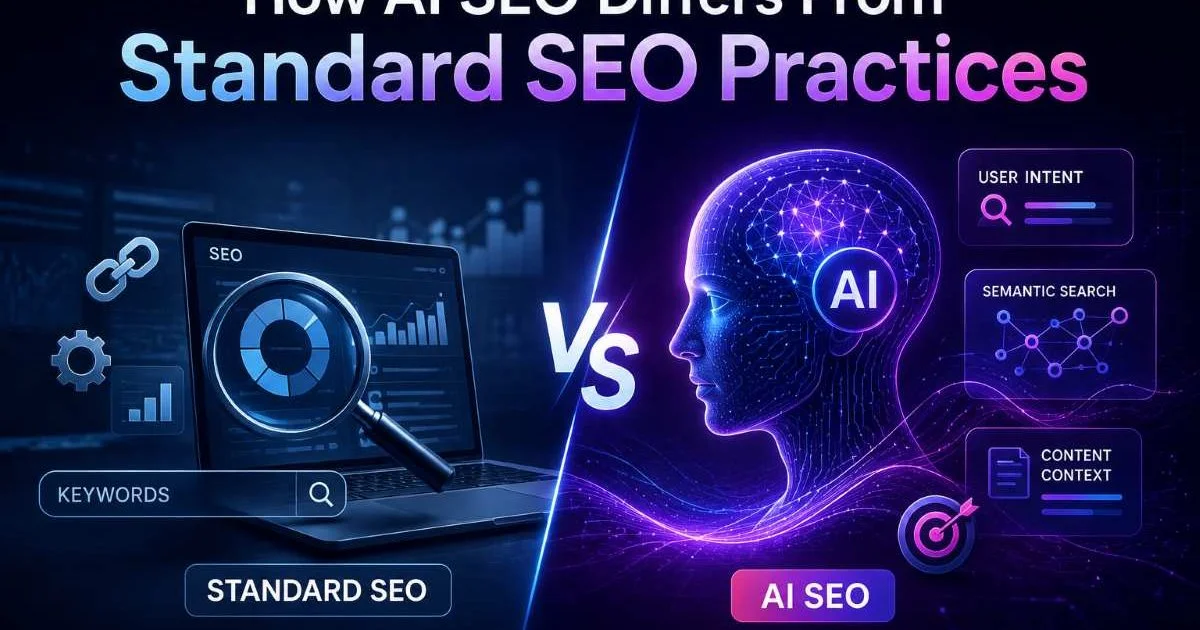
Traditional SEO focuses on ranking signals for search engines like Google, where the end user is still a human clicking a blue link. Website AI agent optimization targets a different consumer: an autonomous system that may never display a search results page at all. The agent might pull your pricing data into a comparison, summarize your API documentation for a developer, or recommend your service inside a chat interface. The optimization goals overlap in some areas (clean HTML, fast load times) but diverge sharply in others.
For example, a beautifully designed hero section with text embedded in an image means nothing to an AI agent. It needs that same information in semantic HTML with proper heading hierarchy. Similarly, JavaScript-rendered content that loads after multiple API calls can be invisible to agents that don't execute client-side scripts. Site structure analysis becomes particularly important here because agents rely on predictable, logical navigation patterns to understand the relationships between your pages.
How an AI Readiness Scan Works
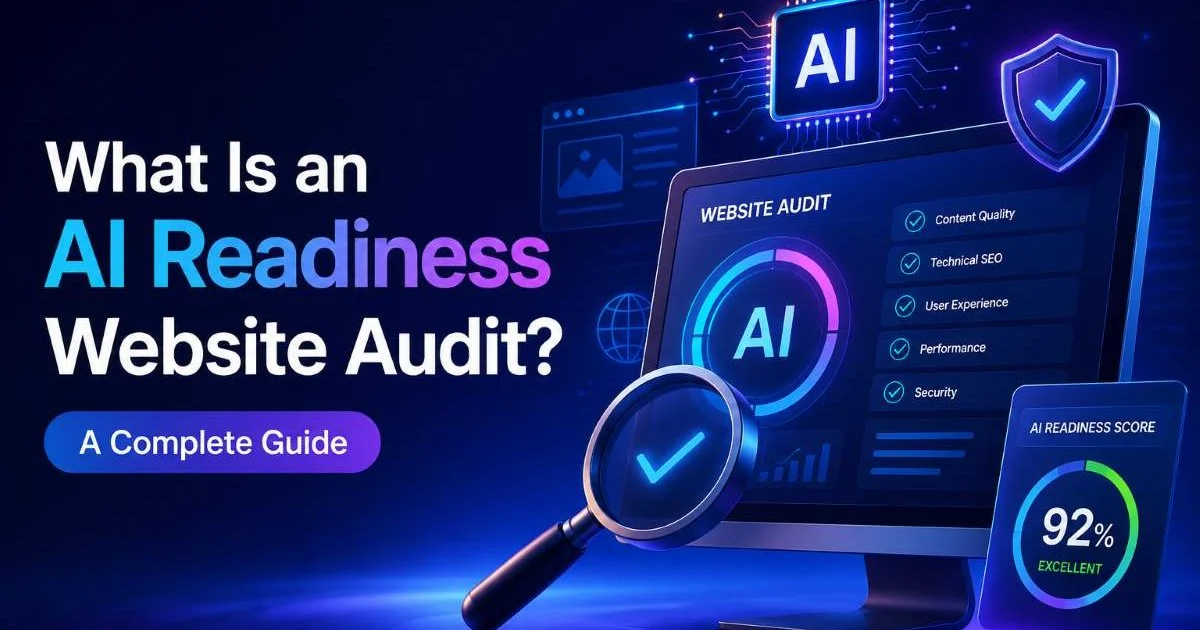
An AI readiness scan evaluates your website across multiple dimensions that matter to autonomous agents. Tools like the one at AI Agent Ready check whether your site communicates the right information in the right format. The scan examines your HTML structure, validates metadata completeness, tests accessibility compliance, reviews documentation quality, and identifies agent-friendly signals like schema.org markup and clear content hierarchies. The output is a prioritized list of issues, ranked by their impact on agent comprehension.
The Five Core Dimensions
The first dimension is structure. This covers your HTML hierarchy, heading levels, navigation patterns, and URL architecture. Agents expect logical nesting: an h1 followed by h2s, with h3s under those. Broken hierarchies confuse them. The second dimension is metadata. Your title tags, meta descriptions, Open Graph tags, and schema markup form the machine-readable identity of each page. A website metadata audit reveals gaps where agents can't determine what a page offers or how it relates to other pages on your site.
Read also How to Check SSL Expiry Date Before It Breaks Your Site
The third dimension is accessibility. This is where ai agent accessibility and human accessibility converge powerfully. Alt text on images, proper ARIA labels, keyboard navigability, and semantic form elements all help agents understand your interface. Fourth, documentation: if you offer an API, a product catalog, or technical specifications, clear and structured documentation tells agents exactly what to expect. Fifth, agent-friendly signals include your robots.txt directives, sitemap completeness, structured data depth, and whether you've explicitly addressed AI agent access in your site's policies.
| Dimension | What It Checks | Common Failures |
|---|---|---|
| Structure | HTML hierarchy, heading levels, URL patterns | Skipped heading levels, flat URL structures |
| Metadata | Title tags, schema markup, Open Graph | Missing schema types, duplicate meta descriptions |
| Accessibility | Alt text, ARIA labels, semantic HTML | Decorative images without alt, div-based navigation |
| Documentation | API docs, product specs, help content | Unstructured PDFs, outdated API references |
| Agent Signals | robots.txt, sitemaps, AI-specific directives | Blocking agents unintentionally, incomplete sitemaps |
Run your AI readiness scan before and after making changes. The before/after comparison gives you concrete proof of improvement for stakeholders.
Why This Matters for Developers and SEO Professionals
The landscape is shifting beneath familiar assumptions. AI agents from companies like OpenAI, Anthropic, Google, and dozens of startups are actively crawling the web, extracting data, and forming recommendations. If your site fails a basic website AI agent optimization check, those agents will move on to a competitor whose site communicates more clearly. For web developers, this means rethinking how you build components, structure your markup, and handle dynamic content rendering. For SEO professionals, it means expanding your audit toolkit beyond PageSpeed Insights and Ahrefs.
Regular site audits already benefit your website in measurable ways, improving page speed, fixing broken links, and surfacing hidden technical debt. Adding an AI readiness layer to that audit process catches a new class of issues. For instance, you might discover that your product pages use schema markup for "Article" instead of "Product," which confuses agents trying to extract pricing or availability data. These are mistakes that won't show up in a traditional SEO crawl but will absolutely affect how agents interact with your content.
Real-World Use Cases
Consider an e-commerce site selling electronics. An AI shopping agent visits to compare laptop prices. If the site uses proper Product schema with price, availability, and review data in structured format, the agent pulls accurate information and potentially recommends that retailer. Without it, the agent skips the site entirely. Another example: a SaaS company with API documentation. If the docs are in well-structured HTML with code examples wrapped in appropriate tags, AI coding assistants can reference them accurately. Poorly formatted docs get ignored or, worse, misinterpreted.
"Your website's next most important visitor won't have eyes, a browser, or any patience for ambiguity."
Monitoring how AI agents interact with your site is becoming its own discipline. Teams are now tracking agent visits separately from human traffic to understand behavior patterns and identify failures. AI agent monitoring tools can show you which agents are visiting, what they're requesting, and where they're encountering errors. This data feeds directly back into your website AI agent optimization strategy, creating a feedback loop that keeps your site competitive as agent capabilities evolve.
Not all AI agents identify themselves in their user-agent string. Some use generic browser signatures, making server-side identification challenging without specialized monitoring.
Common Misconceptions and Related Concepts
What People Get Wrong
The biggest misconception is that traditional SEO covers everything AI agents need. It doesn't. Search engine optimization and website AI agent optimization share a foundation, but they serve different purposes. Google's crawler is designed to index pages for human search queries. AI agents are designed to extract specific data, answer complex questions, or complete multi-step tasks. Your page might rank first on Google and still be completely opaque to an AI agent that can't parse your JavaScript-rendered content or find structured data behind your paywall.
Another common mistake is assuming that accessibility compliance is separate from agent readiness. In reality, most accessibility best practices directly improve machine readability. Proper alt text helps screen readers and AI agents alike. Semantic HTML gives both assistive technologies and autonomous systems a clear content map. When you invest in ai agent accessibility improvements, you're simultaneously improving your site for the estimated one billion people worldwide who live with disabilities. It's a rare case where doing the right thing and doing the strategic thing are the same action.
Some developers also confuse agent-friendly signals with simply having a robots.txt file. A robots.txt tells crawlers what they can and can't access, but agent-friendly signals go much further. They include explicit structured data, machine-readable documentation, clear content licensing information, and even dedicated agent endpoints or APIs. Think of robots.txt as the bouncer at the door and agent-friendly signals as the well-organized interior that helps visitors find exactly what they need once they're inside.
Finally, there's the misconception that this is a future concern. It's not. AI agents are actively visiting websites right now. GPT-based browsing tools, Perplexity's research agent, Google's AI Overviews, and countless enterprise automation systems are all hitting your pages today. Running a site structure analysis and addressing the gaps now puts you ahead of competitors who are still treating this as theoretical. The time for website AI agent optimization was yesterday; the second best time is right now.
Blocking all AI agents via robots.txt might protect your content short-term, but it also makes your site invisible to AI-powered recommendation systems and assistants.
Frequently Asked Questions
?How do I run an AI readiness scan on my site?
?Is fixing schema markup enough, or do I need more changes?
?How long does website AI agent optimization typically take?
?Does blocking AI bots affect my AI agent optimization efforts?
Final Thoughts
Preparing your website for AI agents isn't a separate project from good web development; it's the next evolution of it. The fundamentals remain: clean HTML, proper metadata, accessible design, and well-organized content. What's new is the urgency and the specificity of what agents demand.
Run it on your site today, fix the gaps it surfaces, and start monitoring how agents interact with your pages. The web is gaining a new class of visitors, and they're making decisions about your business whether you're ready or not.
Disclaimer: Portions of this content may have been generated using AI tools to enhance clarity and brevity. While reviewed by a human, independent verification is encouraged.