AI SEO represents a fundamental shift in how websites get discovered, referenced, and recommended by intelligent systems. While standard SEO focuses on ranking in Google's ten blue links, AI optimization targets a different audience: autonomous agents and large language models that crawl, interpret, and synthesize website content for users.
If your site isn't optimized for both traditional search engines and AI agents, you're already falling behind. The technical SEO foundations remain relevant, but the rules are expanding fast. Web developers and SEO professionals need to understand where these two disciplines diverge and where they overlap.
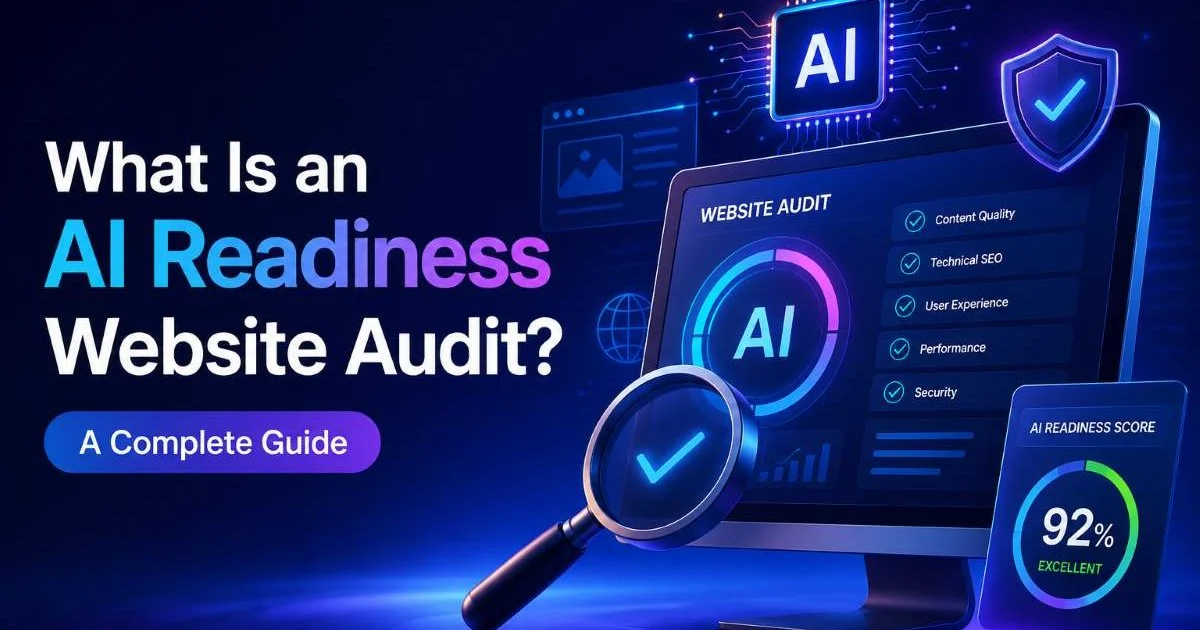
An AI readiness website audit is one of the best starting points for understanding what your site needs. This guide breaks down the practical differences and gives you a clear path to adapt your optimization strategy for the agent-friendly web.
Key Takeaways
- AI agents parse content differently than traditional search engine crawlers do.
- Structured data matters more for AI SEO than for standard ranking signals.
- Content clarity and machine-readable formatting directly affect AI recommendations.
- Technical SEO for AI requires new protocols like llms.txt and agent-specific headers.
- Auditing your site for AI readiness reveals gaps standard SEO tools miss entirely.
1. Understand How AI Agents Consume Content Differently
Intent Resolution vs. Keyword Matching
Standard SEO revolves around keyword placement, search volume, and matching user queries to page content through signals like title tags, backlinks, and content relevance. Google's algorithm ranks pages based on hundreds of factors, but the core mechanic is matching keywords and phrases to what users type. AI agents operate on a completely different model. They don't rank pages; they extract, synthesize, and repackage information into direct answers.
When ChatGPT, Perplexity, or a custom AI agent responds to a user query, it pulls from multiple sources and constructs a coherent response. Your page doesn't "rank first." Instead, it either gets cited as a source or it doesn't. This means the optimization goal shifts from "appear at position one" to "be the most clearly structured, authoritative source an agent can parse." The implications for content strategy are significant.
Crawling Behavior Differences
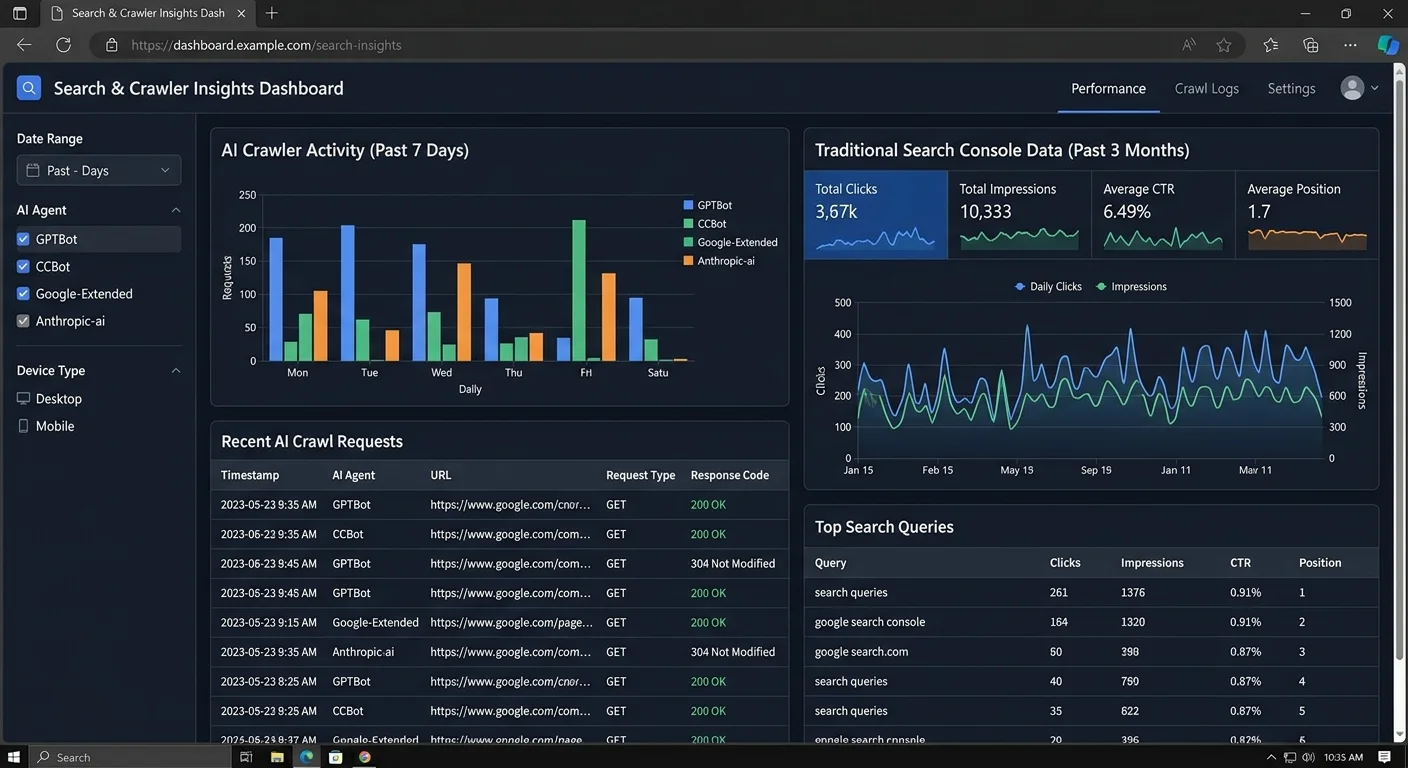
Traditional crawlers like Googlebot follow links, render JavaScript, and index pages based on established protocols in robots.txt and sitemaps. AI crawling works differently. Agents from OpenAI (GPTBot), Anthropic (ClaudeBot), and others have their own user-agent strings and crawling patterns. Understanding how AI crawling differs from traditional crawling is the first step toward proper optimization.
AI crawlers often prioritize clean text extraction over visual rendering. They may ignore complex JavaScript widgets entirely and focus on raw HTML content, structured data, and metadata. If your content is locked behind client-side rendering frameworks without server-side fallbacks, AI agents may see a blank page. This is a technical SEO problem that standard audits rarely flag because Googlebot handles JavaScript rendering better than most AI crawlers do today.
Check your server logs for GPTBot, ClaudeBot, and PerplexityBot user agents to see which AI crawlers are already visiting your site.
2. Restructure Content for Machine Comprehension
Semantic HTML and Hierarchy
Standard SEO best practices already recommend proper heading hierarchy and semantic HTML, but for AI optimization, this becomes non-negotiable. AI agents rely heavily on document structure to understand the relationships between concepts on a page. A page with a single H1, logically nested H2s and H3s, and clearly delineated sections is dramatically easier for an agent to parse than a page stuffed with divs and styled spans.
Use proper HTML5 semantic elements: <article>, <section>, <nav>, <aside>, and <main>. These tags communicate meaning that AI agents use to determine which parts of your page contain primary content versus navigation, ads, or supplementary material. Learning how to make your website AI agent friendly starts with getting this structural foundation right, because agents that can't distinguish your main content from your sidebar will extract poor quality information.
Semantic HTML benefits accessibility too. Screen readers and AI agents parse pages in remarkably similar ways.
Answer-Oriented Content Blocks
In standard SEO, you write for featured snippets by placing concise answers near the top of sections. AI SEO takes this further. Agents prefer content organized as discrete, self-contained knowledge blocks. Each section should answer a specific question completely, with enough context that the answer makes sense even if extracted in isolation. Think of each H2 section as a potential standalone response.
Avoid burying key facts deep inside long paragraphs. Use definition lists, tables, and short factual sentences that agents can extract cleanly. If you're comparing two approaches, a structured table outperforms a meandering paragraph every time. This matters because AI agents are optimized for extraction, not for reading your entire 3,000-word article from top to bottom. As with mobile SEO best practices, concise and well-structured content benefits both human readers and the systems serving them.
3. Implement Agent-Specific Technical Signals
New Protocols and Files
Standard SEO relies on robots.txt, XML sitemaps, and canonical tags. AI optimization introduces new files and protocols that most sites haven't implemented yet. The llms.txt file is an emerging standard that provides AI agents with a plain-text summary of your site's purpose, key pages, and content structure. Think of it as a robots.txt specifically designed for language models, giving them a roadmap of what your site offers.
Similarly, some sites now include .well-known/ai-plugin.json files for ChatGPT plugins and agent integrations. These files declare capabilities, API endpoints, and usage policies. Your technical SEO checklist for AI optimization should include these alongside traditional items like XML sitemaps and hreflang tags. The sites implementing these signals now will have a meaningful head start as AI-driven traffic grows.
Metadata and Schema Upgrades
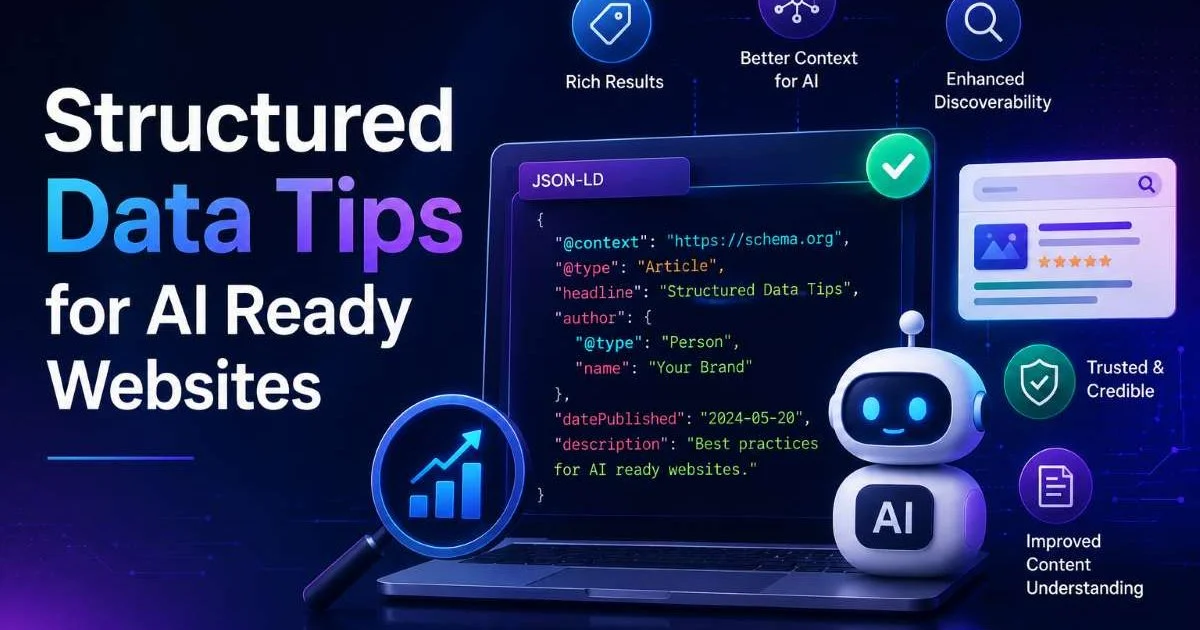
Schema markup has always been a technical SEO best practice, but AI agents consume it more aggressively than traditional search engines. While Google uses schema primarily for rich results, AI agents use it to understand entity relationships, content types, and factual claims. Implementing comprehensive JSON-LD markup (Organization, Article, FAQ, HowTo, Product) gives agents structured access to your content's meaning.
Beyond schema, consider adding explicit content summaries in your page metadata. A meta tag like <meta name="description" content="..."> serves traditional SEO, but an additional structured summary within your page (perhaps in a <script type="application/ld+json"> block) can help AI agents understand your content without parsing every paragraph. Pay attention to your HTTP response headers too. Setting appropriate cache headers and content-type declarations helps agents process your pages efficiently.
| Signal | Standard SEO | AI SEO | Priority Level |
|---|---|---|---|
| robots.txt | Required | Required (with AI bot rules) | High |
| XML Sitemap | Required | Helpful | Medium |
| llms.txt | Not used | Recommended | High |
| JSON-LD Schema | Recommended | Required | High |
| Canonical Tags | Required | Helpful | Medium |
| ai-plugin.json | Not used | Optional | Low |
| Content Summaries | Optional | Recommended | High |
| Semantic HTML5 | Recommended | Required | High |
Don't block AI crawlers in robots.txt without a deliberate strategy. Blocking GPTBot means your content won't appear in ChatGPT responses.
4. Audit and Measure AI Readiness Separately
What Standard SEO Audits Miss
Running your site through Screaming Frog or Ahrefs tells you about broken links, thin content, and crawl errors. These tools were built for traditional search engine optimization, and they do that job well. But they won't tell you whether AI agents can meaningfully extract information from your pages. They won't flag missing llms.txt files, absent content summaries, or JavaScript-dependent content that AI crawlers can't render.
"Standard SEO tools measure your visibility to search engines, but they're blind to how AI agents actually experience your site."
A dedicated AI readiness audit examines your site through the lens of agent interaction. It checks whether your content is extractable, whether your structured data is comprehensive, whether your server responds correctly to AI bot user agents, and whether your documentation is machine-readable. These are distinct concerns from traditional SEO metrics like PageSpeed scores or keyword rankings. Both matter, but they require separate measurement frameworks.
Building a Dual Optimization Workflow
The practical solution isn't to abandon standard SEO for AI optimization. You need both. Build a workflow that addresses traditional search performance alongside agent readiness. Start each quarter with a standard technical SEO audit using your preferred tools, then follow it with an AI-focused scan that checks for structured data completeness, content extractability, and agent-specific file presence. Track metrics from both sides independently.
For AI-specific metrics, monitor which AI crawlers visit your site, how often your content appears in AI-generated responses (tools like Otterly.ai and Profound track this), and whether your structured data validates correctly. Compare these against your traditional rankings and organic traffic. Over time, you'll see the correlation between strong AI optimization and increased visibility across both channels. The sites investing in dual optimization today are building resilience against a search landscape that's shifting rapidly under everyone's feet.
Set up separate dashboards for traditional SEO metrics and AI visibility metrics. Combining them obscures important trends in each channel.

Frequently Asked Questions
?How do I add an llms.txt file to my site for AI agents?
?Does fixing standard SEO issues also fix AI crawling problems?
?How long does an AI readiness website audit typically take?
?Is it a mistake to only optimize for Google and ignore AI agents?
Final Thoughts
AI SEO isn't replacing standard SEO; it's expanding the playing field. The fundamentals of clean code, fast load times, and quality content still matter. But the technical signals, content structure, and measurement approaches differ enough that treating AI optimization as an afterthought will cost you visibility.
Start by auditing your site for agent readiness, implement the technical signals AI crawlers expect, and restructure your content for extraction. The web developers and SEO professionals who adapt their workflows now will own the next era of organic discovery.
Disclaimer: Portions of this content may have been generated using AI tools to enhance clarity and brevity. While reviewed by a human, independent verification is encouraged.